"KNOWLEDGE-BASED FITNESS"
Showing posts with label home exercise program. Show all posts

Sunday, January 3, 2016

Hip Replacement: What You Need To Know Part 3

Hip Replacement: What You Need To Know Part 3
More Information About The Surgery

The Total Hip Replacement prosthesis is made up of a ball component and socket component.  These may be made of metal or ceramic.  Depending on your bone density, the components may be cemented into place or press-fit to allow the bone to grow into the components.  
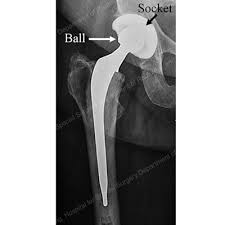
  Image result for total hip replacement components


You will either be put to sleep using general anesthesia, or may be given a spinal/epidural or nerve block which allows you to remain awake, but numbs you from the waist down.  


During the surgery, which lasts a few hours, the damaged cartilage is removed and replaced by the prosthetic components to allow proper function and alignment of your hip.  Plan to stay in the hospital for a few days.  


Initially, a foam wedge may be placed between your legs in order to maintain the hip precautions (prevent ankle crossing). 


A Physical Therapist will evaluate your strength, balance and ability to transfer, walk and navigate stairs (if you have stairs at home) the day of the surgery or a day after, depending on the surgeon's orders.  If it seems that you will not be safe to return home, inpatient rehab will be recommended.  

Pneumonia is potential risk following surgery due to pain medication, bedrest and anesthesia.  To help prevent pneumonia, a spirometer will be provided in order to minimize shallow breathing.  This measures the amount of air you inhale and exhale.  You must use this frequently throughout the day as an exercise.

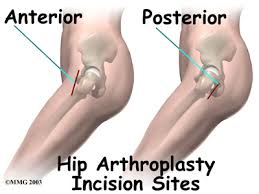
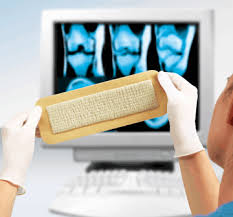
Your incision may be closed using stitches or staples which will be removed within two weeks.  A water proof bandage may be applied by the surgeon, which will allow you to shower without having to change the bandage.  

Image result for hip replacement incision site 

Image result for hip replacement incision site waterproof bandage

Exercise is critical in your recovery.  Following inpatient rehab, you may want to consider home care Physical Therapy.  On average, the return to light daily activities takes 3-6 weeks.  Your Physical Therapist may provide you with a Home Exercise Program which you should perform daily.  These exercises can be purchased in video format HERE.  You can also find videos on bed mobility, transfers, stair navigation, fall recovery, and embolisms with the Tips for Knee Rehab: $16.95 DVD and Home Bound and Deconditioned DVD: $26.95

One common life threatening complication following surgery is the formation of blood clots in your leg veins.  


TEDs support stockings and blood thinners are usually prescribed by your surgeon as a preventative measure.  
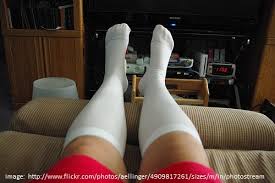
Image result for TEDs stockings
Ankle pumps and daily walking will also be beneficial.  Warning signs of a blood clot are 
1)pain in your calf unrelated to the surgery site
2)redness, warmth and/or swelling of your leg.  

If you suddenly experience shortness of breath or chest pain, call 911 as this may mean that a clot has reached your lungs and you may be experiencing a pulmonary embolism.  

Following surgery, there is always a risk of infection.   If you suffer from a fever, chills, redness or swelling at the incision site, drainage from the wound or severe pain in the hip, you will need to call your surgeon immediately and follow all directions received. Also keep in mind that you will no longer be able to have dental work without taking antibiotics prior.  

If you plan on travelling after your surgery, consult with your surgeon to discuss how long you need to wait following the surgery.  You may also want to request a card that will tell all travel security agents that you have a prosthetic hip, as you may activate metal detectors following the replacement.

For the Total Hip Replacement DVD, which explains common Physical Therapy exercises and appropriate time frames following the surgery, click HERE.

Sunday, April 26, 2015

Get A Jump Start On Your Recovery

Get A Jump Start On Your Recovery


The above is something that has become very common regarding health care coverage.  Many times, your medical insurance will not cover enough Physical Therapy treatment, or not enough local providers will accept your insurance.  Either way, you are left wondering if you will be able to return to your prior athletic or functional level.  That is where www.strengthondemand.com comes in.  

Exercises for common therapy diagnoses are offered in the Protocol section of our website, including protocols for the ankle, knee, hip, shoulder, elbow, neck and lower back.  There is also a protocol for people who are Homebound & Deconditioned, recently released from the hospital, and those who are having difficulty with balance, transfers, bed mobility and fall recovery.  All protocols are in video format based on time frames following your injury or surgery.  You are not only educated on what exercises to do, but you are also advised on when to perform the exercises in order to maximize your rehabilitation.  

KB Fitness Home Exercise Physical Therapy Protocols can be used alongside your present therapy treatment.  If you do not feel that you are receiving an adequate amount of Physical Therapy from your current provider due to insurance issues, or if you can not afford to attend therapy at all, KB Fitness Protocols can help! You are provided with printouts of each protocol's exercises so that you can consult with your doctor or therapist for further guidance. A Consultation Service is also offered to ensure that your questions are answered, further guiding your recovery.  

Let KB Fitness be your Knowledge Base!!

Thursday, November 20, 2014

Fine Tuning Your Home Care Patient's Squat

Fine Tuning Your Home Care Patient's Squat
 
 
The previous post discussed the techniques and benefits of both the Box Squat and the Face the Wall Squat.  Both types of squats are performed using body weight, and they are very helpful in providing external cues for performing a correct squat.  In the Home Care setting, I have the majority of my patients (most of which are elderly) perform squats while holding onto their kitchen sink.  The kitchen sink is a great place to perform standing exercises at home because it is stable enough to support you if you lose your balance (unlike holding onto the back of a chair which may tip over).  I include squats in almost all of my home treatments because of its functional everyday value.  However, most of my patients require verbal and tactile cues to perform the squat correctly.  Incorrect performance may cause more harm than good, so it is extremely important to cue your patients as needed.
 
 
I first have my patient stand comfortably facing the sink with their feet shoulder width apart.
 
As they squat, I make sure that their knees are in proper alignment in reference to their feet, their lower back remain straight (not vertical), and their body weight shifts posteriorly onto their heels as they hinge at the hips.
 
Many patients squat vertically.  They keep a straight spine, and lower themselves vertically toward the floor.  Their knees cross anterior to their toes, causing excessive stress on the knees
 
This is incorrect.  You want to maintain a straight lower back.  However you should do this by hip hinging, not by holding a vertical position
 
If the patient squats incorrectly, I will place a chair behind them for an external/visual cue.  I then ask them to lower themselves as if they are trying to sit in the chair. 
 
The chair will provide them with the "motivation" to hinge their hips, pushing their butt back to the chair.  As you can see, the lower back remains straight, not vertical
 
If the chair cue doesn't work I have my patient step as close to the sink as possible, placing their feet under the cabinet so that their knees come close to touching the cabinet door
 
Upon squatting, if still performed incorrectly with anterior knee translation in relation to the feet, the knees will hit the cabinet doors which will prevent any further anterior motion. 
 
As they continue to lower themselves, they will have no other option than to hinge at the hips, driving their butt back.  This will transfer their body weight onto their heels and should correct their squat

Wednesday, June 4, 2014

Negotiating With Your Patients

Negotiating With Your Patients
 
 
You would think that a patient would do anything in their power to return to their prior functional level.  Unfortunately, this is not always true.  For patients who were in the hospital for an extended period of time, they usually return home extremely deconditioned, with low self-confidence, feeling hopeless.  They may receive Home Care Physical Therapy 2-3 times a week with the therapist establishing a Home Exercise Program to be performed on the days the therapist is not there.  However, in my experience, when discussing rehabilitation with these patients, they want to get better but are non-compliant with their exercise program.  I admit, some of the exercises become monotonous after a while.  I have come to the realization that I must choose my battles, and negotiate in order to "win the war."  If a patient is not performing the exercises on his 'non-PT days,' then I try to find something that they will do...something less complex than a list of exercises.  For these deconditioned patients, I found that walking is a an all-around conditioning exercise that they are not so resistant to.  Because many of them are deconditioned, I usually recommend short frequent walks in their home.  Many of them spend a great deal of time on the couch watching TV.  Because of this, I recommend getting up and walking a lap around the house whenever a commercial comes on.  When their show returns, they can go back to their seat to watch it.  They will repeat these short frequent walks every time a series of commercials comes on.  You would be amazed at how much exercise this is.  This is one way to get your patient to increase the volume of activity without being so resistant to it.

Wednesday, October 9, 2013

ACL Repair

ACL Repair
 

The ACL stands for the Anterior Cruciate Ligament in the knee.  The ACL limits anterior translation of the tibia on the femur. 

This is a very common injury, particularly for athletes.  It may occur upon a direct blow to the knee region from the front, which is common in football.  Sometimes you will hear a "pop" upon ligament tear, and the knee joint swells quickly, making it painful to walk.  A feeling of knee instability may also occur following this injury.  If surgical repair is necessary, you will be facing months of Physical Therapy.  This will be time consuming and may be financially stressful.  To speed up your recovery, you will want to be compliant and persistent with your home exercise program.  To help you with this, www.strengthondemand.com offers a DVD Home Exercise Program that will guide you from Week 1 through Week 12 following your ACL Repair.  This DVD includes the most common ACL Repair Therapeutic Exercises for each time frame during your recovery.  This will speed up your recovery, saving you time and money.  
 
Below is a link to an ACL Repair Surgery video, as well as the link to the S.O.D. ACL Repair Rehabilitation DVD.  Check it out.


Sunday, July 14, 2013

Physical Therapy At Home

Physical Therapy At Home


Many times following a surgery or injury, you may have a very difficult time leaving your home.  Your doctor may recommend a Home Health Agency to provide Skilled Physical Therapy Services in your home.  Your insurance may cover these services if you meet certain eligibility criteria, such as: your doctor agrees to the necessity of home care, leaving the home takes a considerable and taxing effort or is not recommended due to your condition, you need a wheelchair or walker or special transportation to leave your home, or you need the assist of another person to leave your home.  If you meet these requirements, you are considered "homebound."  A Physical Therapist may be able to provide treatment in your home.  However, these treatments are limited and do not last forever.  The goal of the therapist will be to help you return to your prior level of function.  When the therapist feels you have reached your goals or met your maximum progression level, you will be discharged.  At that time, you may still feel it to be taxing and difficult to attend any outpatient Physical Therapy visits in a clinic in order to make further progress.  This is where your Home Exercise Program is most important, and Strength OnDemand is here to help.  Strength On Demand offers Physical Therapy video exercise programs on DVD for multiple conditions.  These DVDs explain the necessary exercises, thoroughly discussing the techniques, benefits, and reasons behind doing each activity.  Included is a 15-20 minute follow along routine that you can perform daily.  The workout is already devised for you!  You just have to press 'PLAY' on the DVD player and continue working towards a full return to your prior activity level.  Check out Strength On Demand Protocols to get started today!  You can also purchase many common Physical Therapy related exercise tools here, such as resistance bands, so that you do not have to leave your home to purchase them!    Get started on your road to recovery today!


Saturday, December 8, 2012

Meniscus Arthroscopic Surgery

Many of my patients have undergone arthoscopic surgery for a meniscus tear.  Upon initiating Physical Therapy, they are usually confused as to what the surgery entailed, and do not really know what or where the meniscus actually is.  This video is a good basic explanation of the knee anatomy and surgical procedure. 


Become a member of www.kbfitnessonline.com for access to the step-by-step exercise rehabilitation protocol and follow along treatment sessions following your arthroscopic meniscectomy.  You will also gain access to the full knee exercise video library, which will assist in your progression to a Post-Rehab Fitness Program.